
AI Data Centers Are Coming to Homes: What Maryland Homeowners Should Know
When you picture an AI data center, you probably imagine a massive industrial building filled with servers and consuming enormous amounts of electricity. But what if part of the next generation of AI computing infrastructure looked more like an air conditioner sitting beside your house?
That’s the idea behind a new technology called XFRA from smart electrical panel manufacturer SPAN. Working with NVIDIA and residential builders, SPAN is developing small, distributed AI data centers that can be installed at individual homes. Instead of concentrating all that computing power inside giant data centers, XFRA is designed to spread some AI computing capacity across many smaller residential nodes.
No, that doesn’t mean mini data centers are suddenly appearing beside homes throughout Baltimore. The technology is still in its early rollout. But it’s a fascinating development – especially in Maryland, where the electrical demands of data centers and the capacity of the power grid have become increasingly important topics.
What Is a Home AI Data Center?
SPAN describes XFRA as a distributed data center built from individual computing nodes located at homes and small businesses. Each residential node is essentially a compact, high-powered computer system designed for demanding AI workloads. According to XFRA’s published specifications, a node includes 16 NVIDIA RTX PRO 6000 Blackwell Server Edition GPUs, four AMD EPYC processors and approximately 3 TB of memory. That’s considerably more computing horsepower than your average home PC.
The equipment is designed to be installed outdoors and uses liquid cooling rather than relying exclusively on the type of fan-based cooling commonly associated with computer servers. The published design includes a roughly 35,000-BTU heat-pump cooling system and targets an operating sound level of about 60 decibels.
In other words, from the outside, the equipment may look and sound a little more like residential mechanical equipment than what most of us picture when someone says “data center.”
Why Put Data Centers at People’s Homes?
Electricity is a huge part of the AI story. Large traditional data centers require tremendous amounts of electrical capacity, and adding that capacity to the power grid can require major infrastructure projects and lengthy utility interconnections. SPAN’s approach is different. Instead of building all-new electrical infrastructure in one location, XFRA is designed to take advantage of electrical capacity that already exists at homes but isn’t being used at a particular moment. Think about your home’s electrical service. Your house isn’t drawing its maximum possible electrical load 24 hours a day. Demand rises and falls depending on what’s running.
XFRA’s concept is to identify that unused electrical “headroom” and use some of it for computing without interfering with the electricity the homeowner needs.
This Is Where the Smart Electrical Panel Comes In
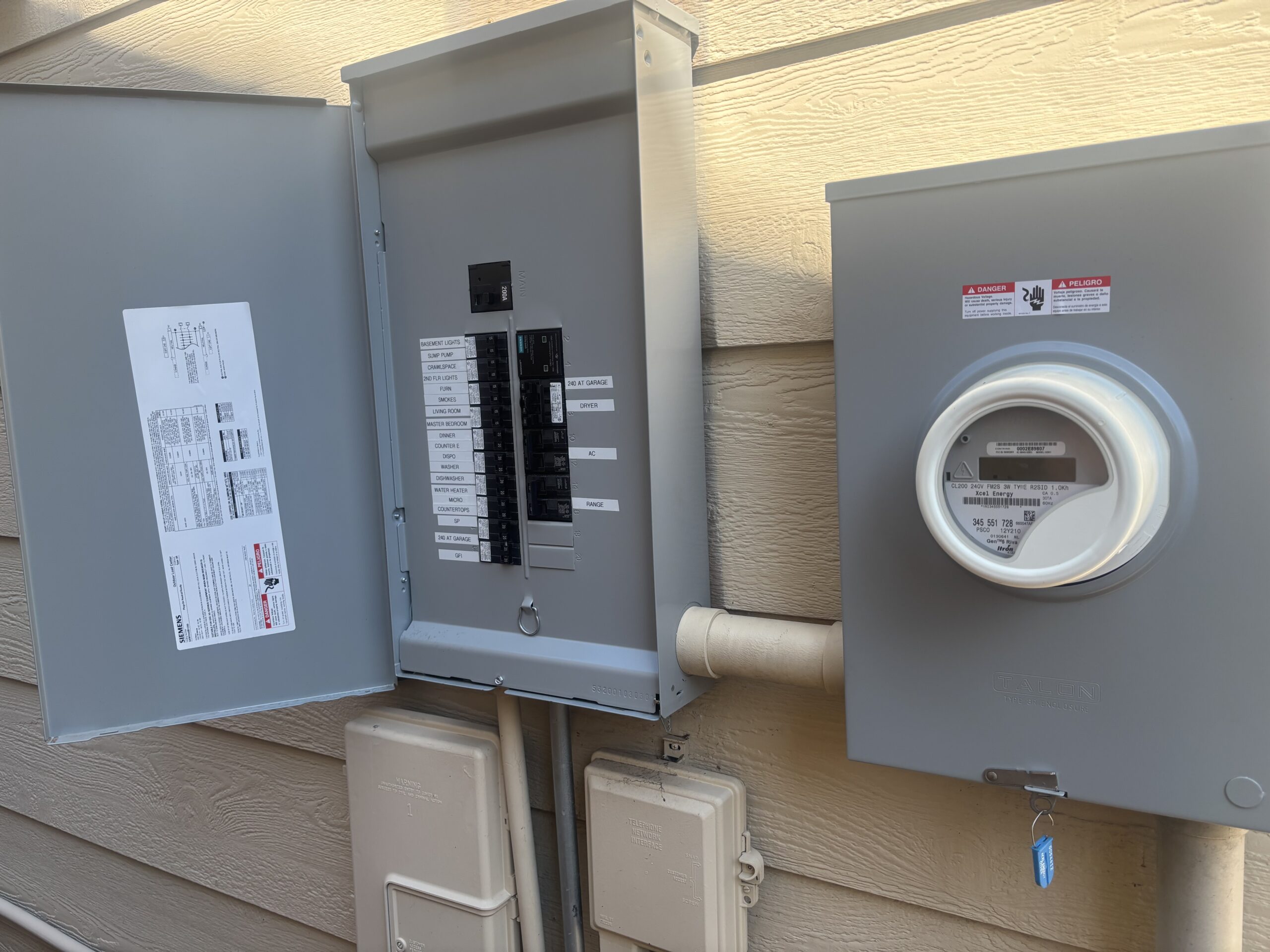
One of the most interesting parts of XFRA isn’t actually the computer. It’s the electrical panel. The system is designed around a SPAN smart electrical panel that can monitor and manage electrical loads throughout the home. Rather than treating every circuit as a passive load, the panel provides real-time information and control over how electricity is being used. XFRA uses that capability to determine how much electrical capacity is available for computing. Your home’s needs come first. When household electrical demand increases, the system is designed to adjust the computing load accordingly.
This type of intelligent load management could become increasingly important as American homes add more high-demand electrical equipment, including EV chargers, heat pumps, induction ranges, battery storage and other electric appliances.
There’s a Battery Involved, Too
The residential XFRA design also incorporates a 15 kWh battery. That battery helps support the computing node while also providing backup power capability for the home during an outage. XFRA says its residential system is designed around three major pieces of equipment: the compute node, the SPAN smart electrical panel and whole-home battery storage. Optional rooftop solar can also be integrated where appropriate.
This makes the concept particularly interesting from an electrician’s perspective. The humble electrical panel is evolving from a box filled with breakers into something capable of actively coordinating power among the house, batteries, solar panels, EV chargers and potentially even computers performing AI workloads.
Are These Mini Data Centers Already Being Installed in Baltimore?
Not as part of a broadly available residential program. As of September 2026, SPAN says it is working directly with U.S. residential new-construction builders on its initial 100-home XFRA proof of concept. The company says it plans a broader U.S. rollout beginning in 2027, initially emphasizing new construction and build-to-rent developments.
SPAN has also said it is developing additional installation options that could eventually include retrofits for existing homes.
So if you live in Curtis Bay, Baltimore or elsewhere in Maryland, you can’t simply call an electrician today and order an NVIDIA-powered XFRA data center for the side of your house.
At least not yet.
Why This Matters for Maryland Homeowners
Whether residential data centers become commonplace or remain a relatively specialized technology, XFRA points toward a much larger change happening inside our homes. Residential electrical demand is evolving quickly.
A house that once needed electricity primarily for lights, appliances and air conditioning might now have an EV charger, electric heat pump, solar system, battery backup, induction range and sophisticated home electronics. Add emerging technologies such as distributed computing, and managing electrical capacity becomes increasingly important.
That doesn’t necessarily mean every home needs a larger electrical service. Technologies such as smart panels and load management are being developed specifically to make better use of the electrical capacity that’s already available.
For electricians, builders and homeowners, understanding the home’s electrical capacity is becoming just as important as simply adding another circuit.
Could Your House Really Become Part of a Data Center?
Potentially. XFRA’s idea is that thousands of individual computing nodes can work together as one distributed computing network. Software coordinates workloads among the nodes, allowing them to collectively provide computing resources without all of the equipment being housed in the same enormous building. SPAN says this distributed model isn’t intended to eliminate traditional data centers. Massive centralized facilities will still be necessary for many AI workloads. Instead, residential nodes could supplement them, particularly for AI inference and other computing tasks that can benefit from being distributed geographically.
It’s essentially the data-center version of thinking outside the box—quite literally.
What Would a Homeowner Get Out of It?
SPAN says homeowners participating in the XFRA concept would receive the smart electrical panel, whole-home battery backup and computing equipment as part of the system. The company also describes potential homeowner benefits including discounted electricity, high-speed internet and compensation for hosting the equipment. However, XFRA remains in the proof-of-concept stage, and SPAN says specific homeowner compensation and program details are still being developed.
That distinction is important. XFRA is a real technology currently being tested, but many details about how a future consumer program would work have not yet been finalized.
The Electrical Panel Is Becoming a Lot Smarter
Whether or not there’s ever an AI data center sitting beside your Maryland home, technology like XFRA illustrates just how quickly residential electrical systems are changing.
Electrical panels are increasingly being asked to coordinate solar generation, battery storage, EV charging, heating and cooling equipment and other high-demand loads. Smart load management could allow homeowners to add new technology without automatically assuming that every upgrade requires dramatically increasing electrical service capacity.
That’s a major change from the traditional electrical panel that’s been quietly hanging on the basement or garage wall for decades.
And apparently, running AI computers might eventually be added to its job description.
Electrical Panel Upgrades and Electrical Services in the Baltimore Area
You don’t need an AI data center to wonder whether your home’s electrical system is ready for today’s technology.
If you’re considering an EV charger, heat pump, backup battery, generator, major appliance or other electrical upgrade, C&R Electric can evaluate your existing electrical panel and service capacity and help determine what upgrades may be appropriate.
C&R Electric provides residential electrical services in Curtis Bay and throughout the Baltimore area, helping Maryland homeowners prepare their electrical systems for both today’s needs and whatever comes next.
Frequently Asked Questions
Can you really put an AI data center at a house?
Yes. SPAN’s XFRA technology is designed to place individual AI computing nodes at homes and small businesses and connect those nodes into a larger distributed computing network. The initial residential program is currently a limited proof of concept rather than a broadly available consumer product.
Is NVIDIA involved with these home data centers?
Yes. NVIDIA is an initial XFRA launch partner, and the residential nodes are designed to use NVIDIA RTX PRO 6000 Blackwell Server Edition GPUs.
How much electricity does a home AI data center use?
XFRA is specifically designed to dynamically use electrical capacity that isn’t currently needed by the home rather than simply drawing maximum power continuously. The SPAN electrical panel manages available capacity between household needs and the computing node.
Do XFRA home data centers have batteries?
The residential XFRA configuration includes a 15 kWh battery designed to support the node and provide backup capability for the home.
Can I install an XFRA data center at my Maryland home now?
Not through a broadly available consumer program. SPAN says its initial proof of concept involves 100 U.S. new-construction homes, with broader expansion planned beginning in 2027.
Will residential data centers replace large data centers?
That’s not SPAN’s stated goal. XFRA is designed to supplement centralized data centers by providing distributed computing capacity for workloads such as AI inference, cloud gaming and other applications that can benefit from geographically distributed computing.
Share this article
Follow us
Latest articles
October 15, 2026
October 15, 2026